Skip to content

Managing Waste on a Modern Job Site
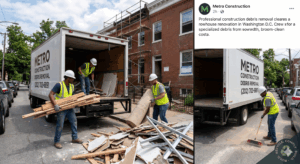
Executing a residential remodeling project or coordinating a commercial space buildout in the heart of the nation’s capital is a highly rewarding investment. Yet, the moment the heavy demolition sledgehammers stop swinging and the structural alterations take shape, builders and property owners are instantly confronted with an unavoidable byproduct: an imposing mountain of raw construction waste. Piles of fractured drywall, splintered wooden studs, broken floor tiles, and jagged metal framing tracks quickly accumulate, cluttering walkways and stalling project timelines.
Managing this specific type of material safely and legally requires an understanding of municipal waste ordinances. Because Construction and Demolition (C&D) debris cannot simply be thrown into standard municipal trash bins or left on an urban curb, securing dependable construction debris removal in Washington DC is essential. Relying on professional hauling services keeps your job site fully compliant with local environmental laws, protects your crew from structural hazards, and ensures a clean workspace as you move into the final phases of construction.
Identifying Specialized Construction Debris
Municipal disposal systems draw a strict line between ordinary household garbage and industrial renovation waste. To ensure your site is sorted correctly, it helps to understand exactly what materials fall into the specialized debris classification:
- Drywall, Sheetrock, and Plaster Components: These interior wall materials are highly dusty and dense, requiring dedicated containment to prevent tracking chalk and powder across neighboring properties.
- Masonry, Concrete, Bricks, and Heavy Tile Blocks: Exceptional weight characterizes these items. Left loose, they can crack standard asphalt and break lightweight hauling equipment, demanding heavy-duty steel trucks.
- Structural Lumber, Framing Pallets, and Trim Woods: Exposed nails, sharp splinters, and chemical treatments make lumber piles a major safety hazard on an active project site if they aren’t cleared out quickly.
- Old Carpeting, Flooring Underlayment, and Shingles: Bulky, awkward rolls of old textiles and petroleum-dense roofing shingles take up massive physical volume and must be sent to specialized processing facilities.
- Plumbing Fixtures, Metallic Conduit, and Electrical Wiring: Old copper lines, iron pipes, and porcelain fixtures can often be separated directly on-site to be processed for industrial scrap metal recovery.
Navigating DC-Specific Logistical Hurdles
Clearing construction waste in the District presents a unique set of urban challenges that suburban projects rarely face. The dense layout of historic neighborhoods like Dupont Circle, Adams Morgan, or Foggy Bottom requires careful coordination:
- Public Space Permit Regulations: If you plan to drop a traditional roll-off dumpster on a public street or in a city alleyway, you must apply for and purchase a public space permit through the District Department of Transportation (DDOT). A professional “load-and-go” truck hauling service completely bypasses this slow administrative process, because our trucks park legally, load the debris immediately, and sweep the site clean all in a single visit.
- Homeowners Association (HOA) Compliance Constraints: In newer or strictly managed residential communities across Arlington, Alexandria, or Rockville, community guidelines often forbid unsightly waste piles or heavy dumpsters from sitting in driveways for more than a few hours. Rapid, scheduled truck hauling satisfies these neighborhood rules seamlessly, keeping your project’s reputation pristine.
- Narrow Access and Tight Urban Spaces: Historic rowhouses often feature tight back patios or narrow alleyways where large industrial dumpster trucks cannot physically maneuver. Compact, highly mobile 15-foot box trucks navigated by experienced crews can easily slip into tight urban spaces to load waste right from the source.
The Value of Industrial Material Recycling
A cornerstone of modern commercial construction waste management is an unyielding commitment to environmental sustainability. Responsible hauling crews do not simply drive your renovation debris to the nearest county landfill to be buried. Instead, the materials are directed straight to modern, certified C&D recycling plants.
At these specialized sorting plants, raw timber fragments are ground down into industrial mulch, clean concrete blocks and old brick pieces are crushed into structural aggregate for road bases, and scrap copper and steel are melted down for new manufacturing runs. By keeping these materials circular, your renovation project contributes directly to regional eco-friendly building initiatives and matches the green standards expected of progressive Washington DC businesses.
Clear Your Site with a Quick Call
Do not allow heavy piles of sheetrock, jagged lumber, and shattered tile to slow down your subcontractors, create liability risks, or delay your final occupancy inspections. Our professional crews provide rapid, completely transparent, and eco-friendly site cleanups across the entire Washington DC metropolitan footprint.
Connect with our dispatch office at (202) 702-6891 to receive an instant estimate over the phone. We will send out a fully equipped truck and a professional crew to completely clear out your construction waste today, leaving your site safe, organized, and broom-clean.